The Man Who Spoke to the Sea
Dark thunderclouds packed together above the small, white washed houses behind the sand dunes. Dense shrubs clamored for space on the top and side of the heaps of sand as if to flee from the waves that today pushed foam fingers farther and farther up the beach. Sand-laden wind blew from the wide water over the dunes, today even lashing the houses huddling behind the dune. The storm came, like many on this part of the coast, with little warning. No warning to those not used to the weather. But here the fishermen knew when the wind blew just so to take their boats to the shore and batten down the hatches. Some said Reinard could even hear the storm two days out by the sound of the waves. All knew that he had had the best sea legs of all the fishermen in Vissermanshoek. Some of the older people in the village even said he had come from the waves, washed ashore as a baby when one of the great merchant ships sailed into a squall and sank, taking all other souls upon it to the salty depths.
But not Reinard. He was saved and adopted by old Dan Shoestring and lived the life of a fisherman, as connected to the sea as any could be. They said he heard it speak. “Not in a language you would understand easily, you know” as old Shoestring said. “He listens to all its secrets,” they said. They also said his wife, Sanna, was of the sea-folk, just like they said she had looked the water serpent in the eyes. Like they said he had given her the jewel from his brow to wear upon her neck. Like they said his family was destined for great things. Like they said Sanna went back to the sea-folk when her youngest daughter turned three. Like they said she had moved to Cape Town to live the life of the upper class. Like they said the rich strangers would come. Like they said Reinard’s heart was too broken to ever heal. They were right about three things. That rich people will come and build mansions to block the sea. That Reinard’s children would not be fisherman like generations before. That Reinard’s heart was broken.
The first to come and prospect for land was a certain sir with an unpronounceable surname that came form the city. Not that the home would be his residence, of course, just over weekends and holidays when he wanted a ‘silent retreat’. He drove in teams of builders and built a house the size of a small village, a three storey high monstrosity with a flat roof where he and his friends could go for a cocktail or three and stare drunkenly at the horizon. Not that he wasn’t friendly at first in a sort of speak-slowly-to-people-not-as-highly-developed-as-you kind of way that said he regarded all other people as imbeciles to be tolerated to do menial work, but not quite being able to reach his own level of perfection.
One weekend he even dared to go to one of the houses to quiet the children who we playing outside –five minutes’ walk from his sprawling home. Needless to say that the show of a shotgun and the village driving him back to his own house had his ego bruised enough to stay away from his house in the following weeks. It was during this lull in cocktail parties that The Accident came to the village.
It was a storm like no other – not even Reinard had heard it in the waves, nor saw it in the wind. It was just there, out of the blue, breaking the small fishing boats like kindle and sending Reinard overboard from his. He still survived, though, again saved from certain drowning much like when he was a baby, though this time with a broken leg that wouldn’t quite heal. The village was left in shock. Three of their brothers had been taken by the waves. Five more were in hospital. One thatched roof caved in and the first rich mansion to be built in Vissermanshoek sunk a foot into the sand.
After the house built on sand sunk and one wall was lost to the waves, the village rejoiced that the rich sir Whatshisname would be staying in the city indefinitely. At least now, so they thought, they would be able to live in peace behind the dune, making an earnest living. Unfortunately, this did not stop others from coming to build their own sea-side mansions and host countless people themselves. The working crews were soon transported to the village, shacks spreading out like wild-fire in a few weeks, bringing noise, shebeens and litter.
And Reinard saw it all from his house where he sat on the porch, waiting for his leg to heal and feel the waves beneath him once more. With his children long gone to the cities to work, he felt truly alone, stranded behind the sheltering dune and wishing only to see the sea again. He waited and waited, growing greyer by the day. Most of all he missed the voice of the sea as it spoke to him while he waited for a net to fill.
It was then that the strangest thing yet was said to have happened. Reinard took to walking to the beach every morning, pushing two rows of neatly spaced holes next to his own footsteps in the morning sand as he fumbled along on the old wooden crutches he had been given at the clinic. Then he would sit on the rocks all alone all day until the waters caressed his feet, after which he would silently go back to his empty house before setting out again the next morning. Those that saw him said that he spoke to the sea while he sat there on the rocks. Some said he spoke to himself. Some said he had voices haunting his head. The visit to the hospital had left him pale and wane, but with the sea around him he quickly grew hale again. But he only spoke to the sea. The children of the village took to watching him and poking fun at him, getting an earful from parents who grew scared of the grey old man that only spoke to the sea.
Around him more houses rose from the sand, never heeding the first ill-fated house where it sunk deeper and deeper into the sand. But he never seemed to give a thought to them, simply walking past the row of half-finished houses on his way to the sea.
Erika, the wife of old Shoestring became ever more worried for Reinard, seeing as his children – or anyone else - ever visited anymore. She took to following him to the beach and back, she thought secretly.
Then, the day of his sixtieth birthday, when the rows of houses blocking their view from the sea was finished and filled with rowdy city-dwellers, she followed him for the last time. He walked with his crutches as he always did; his frame smaller that it used to be. Around his neck was the jewel that had belonged to his wife. He climbed into the rocks with difficulty and threw the crutches aside. He held the stone before him and called the name of his long-gone wife.
Now, I know this because Erica told me herself. She said she saw his wife emerging from the ocean looking just like she did forty years ago. She also said he grew young and grew a tail just like a fish. She said he gave her the jewel and followed her into the waves.
They, of course, say it was wishful thinking. They say it was suicide. They say he drowned. The also say there is no water serpent and a fisherman could never own a jewel like he did. But they don’t know the sea’s secrets. They don’t know her language and they still don’t know that a storm is coming when the wind is just so and the waves splash just at that certain angle against your boat.
THE END
Sunday, April 3, 2011

Saturday, April 2, 2011
The Quack – Day 2 NaShoStoMo
Here's day two's piece for the NaShoStoMo challenge. And yes, the mozzies did have their revenge last night. That will teach me!
The Quack – Day 2 NaShoStoMo
All Joseph Henry Robert James wanted in life was fame. He thought he had tried everything, but his legal career was even shorter that his singing career. After a year nobody even remembered that there had ever been a song called “Cerebrations on Helen of Troy” and he looked wistfully at the opera houses and theatres where many others were making a name for themselves. He tried politics, but found it quite boring. He tried seafaring but found the ever-moving ocean waves and bug-filled biscuits not much to his liking. He then tried a writing career, but found barely anyone to read what he had written, and none to enjoy it. At last he decided, on the age of 33 summers, to study to be a doctor. He found the lectures quite agreeable and did not faint at the first sight of blood or of a corpse, which was always a good thing. Yet, when he tried to cure his patients as he was taught to, they never got well. Some even died overnight, as if a sudden plague had swept through the hospital wards. It truly seemed as if his fame would rather be infamy. Joseph could not bear to have another patient of his die and decided to rather leave the medical profession as well.
Joseph Henry Robert James left the city and roamed the country side, doing odd jobs, but more often than not causing rot, blight and sudden locust attacks on the farms he visited. He took this also as a sign that he had not yet reached the place he was meant to be. He was sure that his fame lay just over the next horizon and kept to the roads and to himself, following his feet by day and sleeping under the stars by night.
One day he reached a small town and decided to visit the barber for a good shave and clean-up. He got talking with the barber and soon decided to try his hand at being a barber. How difficult could shaving and cutting hair be, after all? He soon found out that there was a skill to it when his first customer died from a severed jugular. Joseph was chased out of another town.
By nightfall he came to an open field wherein stood a lone wagon and two grazing horses. Rain was coming, and Joseph decided to try his luck at finding shelter in the wagon for the night. He knocked on the rickety wagon door and waited for an answer from inside. Sure enough, a faint voice came from within, telling him to open the door. He opened it slowly and peered inside, waiting for his eyes to adjust to the gloom.
The inside of the wagon seemed a lot larger than the outside and held not only three large bookcases filled with tomes, but also a rack of drying herbs, some bottles containing strangely coloured liquids and an enormous black, three-legged cauldron under which a greenish fire was lit. Inside the cauldron a brownish liquid was bubbling and steaming. Standing behind the cauldron and stirring it with an over-sized wooden spoon was an elderly man dressed in a swallow-tailed coat and top hat. A thick, grey beard hid most of his lower face. He looked up from the cauldron and grinned.
“Greetings, traveller,” he said in a rasping smoker’s voice. “What brings you to this part of the world?”
“There is rain coming and I was hoping to get shelter for the night.” He gave a wary, lop-sided grin.
“Well, boy, you come as if you were called. My apprentice is still out gathering firewood and I need someone to keep stirring here. I guess you’re as good as anyone. Come, I need to add the secret ingredient before the mixture is overcooked.”
Joseph took the spoon and started stirring the thickening liquid. “What is this?” he asked.
The old man rummaged through the bottles on the shelf, muttering to himself and every now and again touching the brim of his hat as if he wanted to make sure that it’s still there.
“That, my dear boy, is General Proudtoe’s Great and Wonderful Cure-all Medicine Patent 212! You see, as soon as I add this distilled Newt Eyes, that solution you are stirring will turn green and start to smoke with red smoke and then the true magic is released! With Patent 212 I am sure I will rule the world – and cure all illness, of course.” He took a spoon from the recess of one coat pocket and measured out a spoonful of the garish green liquid in the bottle. With a flourish he added the distilled Newt Eyes to the concoction brewing in the cauldron. As Joseph stirred, the liquid began to bubble and boil and turn green. Soon blue smoke rose from the liquid and started to fill the wagon. Joseph wondered if the crazy man would follow him if he started running now.
Before he could make his decision, however, the wagon door opened again and another man stepped inside, a bundle of firewood under one arm. At least, he thought it was someone of the male persuasion, although at first glance he wondered whether it was human. The person walked bowed, with a humped back. He wore a worn suit of brown and his face and hands were spotted a myriad of colours. Even his hair – what few strands he still had left of it – stood on end, giving him a strangely disturbing halo of green, blue and brown. Joseph looked at the bubbling cauldron and back to the man – supposedly the apprentice – who had just entered. The same, strange colours mirrored in both.
“Come and taste, Igor, come and taste!” the old man cried and dished out a spoonful which he held out to the apprentice while Joseph looked on with his mouth agape. With a sigh Igor put aside the wood and took the spoon from the old man. He looked up to the sky to say a quick prayer before swallowing the awful liquid in one gulp. He fell to his knees, clutching at his throat and making gurgling noises before falling to the floor, senseless.
I am going to die a famous man on the gallows, Joseph thought as the old man said: “Well, that’s never happened before.”
The man who only wanted to be famous stared at the man he had just helped kill. He wondered if he could run fast enough to get away from the law. Then, almost imperceptibly at first, but then faster and faster, a change came over the man at his feet. First the multicoloured patches on his skin faded to a ruddy, sun-browned colour and then his hair, too, changed to a rich black. Even the hump on his back seemed to melt away.
“Hallelujah and eureka!” the old man shouted. “I’ve done it at last! No! No! You, young man, you’ve done it! I’ve made 211 batches of that cure-all and they have all either killed my apprentices or have them looking like Igor had done only a few minutes ago! It’s a miracle! You have the touch my boy! We’ll be famous!”
The Quack – Day 2 NaShoStoMo
All Joseph Henry Robert James wanted in life was fame. He thought he had tried everything, but his legal career was even shorter that his singing career. After a year nobody even remembered that there had ever been a song called “Cerebrations on Helen of Troy” and he looked wistfully at the opera houses and theatres where many others were making a name for themselves. He tried politics, but found it quite boring. He tried seafaring but found the ever-moving ocean waves and bug-filled biscuits not much to his liking. He then tried a writing career, but found barely anyone to read what he had written, and none to enjoy it. At last he decided, on the age of 33 summers, to study to be a doctor. He found the lectures quite agreeable and did not faint at the first sight of blood or of a corpse, which was always a good thing. Yet, when he tried to cure his patients as he was taught to, they never got well. Some even died overnight, as if a sudden plague had swept through the hospital wards. It truly seemed as if his fame would rather be infamy. Joseph could not bear to have another patient of his die and decided to rather leave the medical profession as well.
Joseph Henry Robert James left the city and roamed the country side, doing odd jobs, but more often than not causing rot, blight and sudden locust attacks on the farms he visited. He took this also as a sign that he had not yet reached the place he was meant to be. He was sure that his fame lay just over the next horizon and kept to the roads and to himself, following his feet by day and sleeping under the stars by night.
One day he reached a small town and decided to visit the barber for a good shave and clean-up. He got talking with the barber and soon decided to try his hand at being a barber. How difficult could shaving and cutting hair be, after all? He soon found out that there was a skill to it when his first customer died from a severed jugular. Joseph was chased out of another town.
By nightfall he came to an open field wherein stood a lone wagon and two grazing horses. Rain was coming, and Joseph decided to try his luck at finding shelter in the wagon for the night. He knocked on the rickety wagon door and waited for an answer from inside. Sure enough, a faint voice came from within, telling him to open the door. He opened it slowly and peered inside, waiting for his eyes to adjust to the gloom.
The inside of the wagon seemed a lot larger than the outside and held not only three large bookcases filled with tomes, but also a rack of drying herbs, some bottles containing strangely coloured liquids and an enormous black, three-legged cauldron under which a greenish fire was lit. Inside the cauldron a brownish liquid was bubbling and steaming. Standing behind the cauldron and stirring it with an over-sized wooden spoon was an elderly man dressed in a swallow-tailed coat and top hat. A thick, grey beard hid most of his lower face. He looked up from the cauldron and grinned.
“Greetings, traveller,” he said in a rasping smoker’s voice. “What brings you to this part of the world?”
“There is rain coming and I was hoping to get shelter for the night.” He gave a wary, lop-sided grin.
“Well, boy, you come as if you were called. My apprentice is still out gathering firewood and I need someone to keep stirring here. I guess you’re as good as anyone. Come, I need to add the secret ingredient before the mixture is overcooked.”
Joseph took the spoon and started stirring the thickening liquid. “What is this?” he asked.
The old man rummaged through the bottles on the shelf, muttering to himself and every now and again touching the brim of his hat as if he wanted to make sure that it’s still there.
“That, my dear boy, is General Proudtoe’s Great and Wonderful Cure-all Medicine Patent 212! You see, as soon as I add this distilled Newt Eyes, that solution you are stirring will turn green and start to smoke with red smoke and then the true magic is released! With Patent 212 I am sure I will rule the world – and cure all illness, of course.” He took a spoon from the recess of one coat pocket and measured out a spoonful of the garish green liquid in the bottle. With a flourish he added the distilled Newt Eyes to the concoction brewing in the cauldron. As Joseph stirred, the liquid began to bubble and boil and turn green. Soon blue smoke rose from the liquid and started to fill the wagon. Joseph wondered if the crazy man would follow him if he started running now.
Before he could make his decision, however, the wagon door opened again and another man stepped inside, a bundle of firewood under one arm. At least, he thought it was someone of the male persuasion, although at first glance he wondered whether it was human. The person walked bowed, with a humped back. He wore a worn suit of brown and his face and hands were spotted a myriad of colours. Even his hair – what few strands he still had left of it – stood on end, giving him a strangely disturbing halo of green, blue and brown. Joseph looked at the bubbling cauldron and back to the man – supposedly the apprentice – who had just entered. The same, strange colours mirrored in both.
“Come and taste, Igor, come and taste!” the old man cried and dished out a spoonful which he held out to the apprentice while Joseph looked on with his mouth agape. With a sigh Igor put aside the wood and took the spoon from the old man. He looked up to the sky to say a quick prayer before swallowing the awful liquid in one gulp. He fell to his knees, clutching at his throat and making gurgling noises before falling to the floor, senseless.
I am going to die a famous man on the gallows, Joseph thought as the old man said: “Well, that’s never happened before.”
The man who only wanted to be famous stared at the man he had just helped kill. He wondered if he could run fast enough to get away from the law. Then, almost imperceptibly at first, but then faster and faster, a change came over the man at his feet. First the multicoloured patches on his skin faded to a ruddy, sun-browned colour and then his hair, too, changed to a rich black. Even the hump on his back seemed to melt away.
“Hallelujah and eureka!” the old man shouted. “I’ve done it at last! No! No! You, young man, you’ve done it! I’ve made 211 batches of that cure-all and they have all either killed my apprentices or have them looking like Igor had done only a few minutes ago! It’s a miracle! You have the touch my boy! We’ll be famous!”
Friday, April 1, 2011
The Flight of the Mosquito - Day 1 of NaShoStoMo
I saw yesterday that the talented Dan Wells has decided on a quite insane idea - write a short story a dey - each day - for the month of April. Find more info at: http://www.nashostomo.org/
Well, I couldn't resist, so here is day one... The Flight of the Mosquito.
The Flight of the Mosquito
Gerry didn’t know if he should curse or pray for strength and patience. He glanced at the red numbers on his radio clock and decided on cursing. It was already 2:30am, he had to get up in two hours and still a lone mosquito was buzzing in his ear. One mosquito, unfazed by the plug-in mozzie poison, the mozzie spray and rub-on, the wrist bands and enough citronella candles to make his room look as if some bizarre cult was about to walk in, wearing dark cloaks and chanting. Even his flailing arm and slaps when he tried to figure out where it was, never hit it. He switched the bedside lamp on and looked around the room. As usual, there was just as suddenly no sight of the bloodsucker.
As if she knew he was going to turn on the light.
The buzzing-screech had stopped just as abruptly.
Maybe the thing wasn’t even natural. Maybe it was just that, a bug. Sent to covertly draw blood for some covert government operation. Like the ants they had walking around at school. Sure the other students thought he was a bit crazy for even having the idea, but what better way was there to listen to what the students are saying? And ants could be anywhere – in the quadrant, on the sport fields, in the classrooms and even going into the lockers. Maybe that was why they never had to have big drug busts at the school – the governing body already knew who the culprits were. And now They have perfected a way to draw blood without you thinking about it twice, or even knowing about it. No one would think mosquito bites strange in the middle of summer. It was brilliant, actually.
But how was he to test his theory? He flicked off the light again and heard the buzzing start immediately. Maybe it doesn’t work in a certain level of light? He sat up in bed, leaving his arms above the blanket and waiting for the light tingle when the bug lands to feed.
At last! He smacked his arm and felt something squash beneath his palm. He turned on the light again to see if he really got the mozzie. Sure enough, this time he had the awful thing. And he had got it before it had time to bite him – there was no blood visible. He looked closer at the smudge on his arm. It must be some kind of new substance that could mimic the real thing. The scientists were getting really clever. But he will be them one ahead, Gerry thought. If they come to the citizens in the dark, he will never be caught in the dark again, even if it means that his electricity bill skyrockets. He will find some way to cover it. He lay back down to sleep, pulling the blanket over his head slightly to block out the worst of the light. Just as he drifted off, his heart skipped a beat.
What will happen when there’s load shedding again?
Gerry didn’t think he would ever be able to sleep again. Or maybe he should think about emigrating to Australia again.
Well, I couldn't resist, so here is day one... The Flight of the Mosquito.
The Flight of the Mosquito
Gerry didn’t know if he should curse or pray for strength and patience. He glanced at the red numbers on his radio clock and decided on cursing. It was already 2:30am, he had to get up in two hours and still a lone mosquito was buzzing in his ear. One mosquito, unfazed by the plug-in mozzie poison, the mozzie spray and rub-on, the wrist bands and enough citronella candles to make his room look as if some bizarre cult was about to walk in, wearing dark cloaks and chanting. Even his flailing arm and slaps when he tried to figure out where it was, never hit it. He switched the bedside lamp on and looked around the room. As usual, there was just as suddenly no sight of the bloodsucker.
As if she knew he was going to turn on the light.
The buzzing-screech had stopped just as abruptly.
Maybe the thing wasn’t even natural. Maybe it was just that, a bug. Sent to covertly draw blood for some covert government operation. Like the ants they had walking around at school. Sure the other students thought he was a bit crazy for even having the idea, but what better way was there to listen to what the students are saying? And ants could be anywhere – in the quadrant, on the sport fields, in the classrooms and even going into the lockers. Maybe that was why they never had to have big drug busts at the school – the governing body already knew who the culprits were. And now They have perfected a way to draw blood without you thinking about it twice, or even knowing about it. No one would think mosquito bites strange in the middle of summer. It was brilliant, actually.
But how was he to test his theory? He flicked off the light again and heard the buzzing start immediately. Maybe it doesn’t work in a certain level of light? He sat up in bed, leaving his arms above the blanket and waiting for the light tingle when the bug lands to feed.
At last! He smacked his arm and felt something squash beneath his palm. He turned on the light again to see if he really got the mozzie. Sure enough, this time he had the awful thing. And he had got it before it had time to bite him – there was no blood visible. He looked closer at the smudge on his arm. It must be some kind of new substance that could mimic the real thing. The scientists were getting really clever. But he will be them one ahead, Gerry thought. If they come to the citizens in the dark, he will never be caught in the dark again, even if it means that his electricity bill skyrockets. He will find some way to cover it. He lay back down to sleep, pulling the blanket over his head slightly to block out the worst of the light. Just as he drifted off, his heart skipped a beat.
What will happen when there’s load shedding again?
Gerry didn’t think he would ever be able to sleep again. Or maybe he should think about emigrating to Australia again.
Wednesday, March 30, 2011
A Father’s Choice
Some Airthai fiction
Here’s a piece I have been working on as background to a bigger piece (perhaps a novel, hint-hint) set in the Southern Lands of Airthai. It takes place about thirteen centuries after the Sundering of the Lands and about two centuries after “A Dragon’s Freedom”. Where the Eastern and Midlands have the Keepers, the Southern Lands had the Khallahna, who split into the Khalné and Khalvér after the Khallahna War. At first the Khallahna all followed the Creator, but the Khalvér followed the Werlea after the war, while the Khalné followed the Ahma (the Werlea’s antithesis).
A Father’s Choice
“Sir? Your son is here to see you. May I send him in? As you wish, Sir. After you, Young Master, your father will see you now.”
Elgar smiled at the retainer and pulled at his shirt and light cloak before stepping into the large office. He knew his red eyes still bespoke of much sorrow, but he would look his father in the eye, looking for the same pain there.
“Father,” he greeted the man behind the desk. His father looked much older than he remembered, as if he had aged fifteen years in the five he had been absent from home. “I came as soon as I could.”
His father kept on writing, not even looking up as he dipped the quill in ink, not saying a word to the young man he hadn’t seen in five years. But Elgar knew better than to speak again. That much he could remember. After nearly ten minutes of silence his father placed the quill aside and looked up at his son. Elgar took after his mother, his hair an indistinct shade between red and brown, his eyes a striking blue offset by his fair, freckled skin. A strange look indeed. And now, a hateful one.
“You came to pay your last respects?”
“Aye, sir. I only got the news three days ago and came directly from the tower with all speed.”
His father steepled his fingers under his chin, looking him up and down. Elgar at first stood proud and tall in the cream and gold cloak of the Khalné, but then realised that the look in his father’s eyes were one of disdain – and of fear.
“Damn you, child!” he shouted and Elgar took a step back. “You went and chose the bloody Khalné?”
Elgar frowned. To him the Khalvér had never been an option. The Né served the Light with their Talent; the Vér served the darkness with magic and spells and turned the Talent into a deadly weapon. He swallowed and tried to speak to the raving man in front of him.
“Sir, if you will – Father! What did you expect of me? To choose the Vér? You know what Mother thought of-“
“You will not befoul her name or memory, you spoiled little brat! I sent you to the tower because I had to, not because I wanted to. You know the Khalné are treated not much better than the Ahma? But the Khalvér and Werlea – people look up to them!
“People fear them, Father. I will not be feared because of my Talent.”
His father sat back down and poured a dark liquid into a glass. He took a swig and stared at his son. “Who knows you are here?”
“Father?”
“Answer!”
“My Né brothers. I came straight here and did not tarry –“
“Good. And now you will leave for the Western Tower with all haste and never return to this house again.”
“Father? But-“
“You are no longer my son.”
The words hit him like a blow to the stomach that left him without any breath.
“Please leave.” His voice was softer this time. “I’ll give you money, my fastest horse, but you have to leave here. Now.”
“I don’t understand, I –“
“You’re not meant to, Elgar.” He took another swig of the liquid. “And there is no time to explain everything.”
“Please, Father –“
“I… I… I promised you to them, Elgar.” He lifted tear-filled eyes to his son.
“To whom?”
“The Vér.” His voice was just a whisper.
Elgar looked at him in disgust, finding no words now.
“You were ill, just after you were born, you see? They said, they said they can heal you, that they know of a potion –“
“And in return for their witchcraft you offered me?”
“I gave you life!”
“You betrayed the house! You betrayed me!” He bowed mockingly. “Goodbye, Father.” He left the room.
He took another swig of the dark fluid. There had been another promise as well. He had become a Nightwatcher, spending his nights tracking people with the Talent that stood against the Khalvér. He didn’t do the killing himself, not usually. But the work still took its toll. It was never what he had wanted. But he had given his word and would never be free from them. Never. But they had saved his son. They gave Elgar back his life and now he was healthy. He didn’t have a choice. Not then, not now. He sent Elgar away again to save him. Only the Né could keep him from harm now.
Here’s a piece I have been working on as background to a bigger piece (perhaps a novel, hint-hint) set in the Southern Lands of Airthai. It takes place about thirteen centuries after the Sundering of the Lands and about two centuries after “A Dragon’s Freedom”. Where the Eastern and Midlands have the Keepers, the Southern Lands had the Khallahna, who split into the Khalné and Khalvér after the Khallahna War. At first the Khallahna all followed the Creator, but the Khalvér followed the Werlea after the war, while the Khalné followed the Ahma (the Werlea’s antithesis).
A Father’s Choice
“Sir? Your son is here to see you. May I send him in? As you wish, Sir. After you, Young Master, your father will see you now.”
Elgar smiled at the retainer and pulled at his shirt and light cloak before stepping into the large office. He knew his red eyes still bespoke of much sorrow, but he would look his father in the eye, looking for the same pain there.
“Father,” he greeted the man behind the desk. His father looked much older than he remembered, as if he had aged fifteen years in the five he had been absent from home. “I came as soon as I could.”
His father kept on writing, not even looking up as he dipped the quill in ink, not saying a word to the young man he hadn’t seen in five years. But Elgar knew better than to speak again. That much he could remember. After nearly ten minutes of silence his father placed the quill aside and looked up at his son. Elgar took after his mother, his hair an indistinct shade between red and brown, his eyes a striking blue offset by his fair, freckled skin. A strange look indeed. And now, a hateful one.
“You came to pay your last respects?”
“Aye, sir. I only got the news three days ago and came directly from the tower with all speed.”
His father steepled his fingers under his chin, looking him up and down. Elgar at first stood proud and tall in the cream and gold cloak of the Khalné, but then realised that the look in his father’s eyes were one of disdain – and of fear.
“Damn you, child!” he shouted and Elgar took a step back. “You went and chose the bloody Khalné?”
Elgar frowned. To him the Khalvér had never been an option. The Né served the Light with their Talent; the Vér served the darkness with magic and spells and turned the Talent into a deadly weapon. He swallowed and tried to speak to the raving man in front of him.
“Sir, if you will – Father! What did you expect of me? To choose the Vér? You know what Mother thought of-“
“You will not befoul her name or memory, you spoiled little brat! I sent you to the tower because I had to, not because I wanted to. You know the Khalné are treated not much better than the Ahma? But the Khalvér and Werlea – people look up to them!
“People fear them, Father. I will not be feared because of my Talent.”
His father sat back down and poured a dark liquid into a glass. He took a swig and stared at his son. “Who knows you are here?”
“Father?”
“Answer!”
“My Né brothers. I came straight here and did not tarry –“
“Good. And now you will leave for the Western Tower with all haste and never return to this house again.”
“Father? But-“
“You are no longer my son.”
The words hit him like a blow to the stomach that left him without any breath.
“Please leave.” His voice was softer this time. “I’ll give you money, my fastest horse, but you have to leave here. Now.”
“I don’t understand, I –“
“You’re not meant to, Elgar.” He took another swig of the liquid. “And there is no time to explain everything.”
“Please, Father –“
“I… I… I promised you to them, Elgar.” He lifted tear-filled eyes to his son.
“To whom?”
“The Vér.” His voice was just a whisper.
Elgar looked at him in disgust, finding no words now.
“You were ill, just after you were born, you see? They said, they said they can heal you, that they know of a potion –“
“And in return for their witchcraft you offered me?”
“I gave you life!”
“You betrayed the house! You betrayed me!” He bowed mockingly. “Goodbye, Father.” He left the room.
He took another swig of the dark fluid. There had been another promise as well. He had become a Nightwatcher, spending his nights tracking people with the Talent that stood against the Khalvér. He didn’t do the killing himself, not usually. But the work still took its toll. It was never what he had wanted. But he had given his word and would never be free from them. Never. But they had saved his son. They gave Elgar back his life and now he was healthy. He didn’t have a choice. Not then, not now. He sent Elgar away again to save him. Only the Né could keep him from harm now.
Thursday, March 24, 2011
The Wizard and the Shadows – Flash Fiction
Here’s a flash piece I wrote for SFFWorld under the theme “Fantasy cliché”. I just had to make the “ancient language” the youngest Germanic language…
Next week I'll have a new flash piece and worldbuilding from Airthai's Southern Lands and a new map.
Refugees had started arriving in the valley even before Winter began. They came from the north, fleeing to the southern plains and valleys to get away from the war between the Elves and Dwarfs that consumed the lands north of the Firewater Mountains. The Môrevallei Valley had always been a quiet place, keeping its own to its own, wary of travellers and even more wary of the strangers that arrived daily and even sometimes slept in the muddy streets.
She’ne’ar, wizard of the seventh order, arrived in town on the first Wednesday of the fifth month. He was following a small band of ragged people. His own scarlet robe was tattered. His dark, pointy hat had long since lost its shape in the daily rainstorms that plagued these lowlands. But he still had his staff of magical goldwood – and that counted for a lot in the world of wizards. He strode to the inn’s common room where room was at once made for him by the fire. He sat down and lit his pipe while he waited for his tankard of spiced ale to arrive. Though he stared into the fire, his ears did not miss one word of the conversations around him. It was not only humans that fled the war in the north. Talk among the locals and refugees were of people dying strangely in the night. Not the doing of nature, the poor folk seemed to have fought some kind of demon that only they could see. Something wrought by the Dark Lord of old, no doubt, sent south to place the free peoples in bondage. She’ne’ar sighed. He knew the beings’ true nature. He had found the shadows.
To lighten the mood one of the less sober gents began a rendition of Bring me another partridge or I’ll drink all your beer. It was after the fourth chorus that the wizard slipped away to the dark streets. It was nearing twelve o’clock. He took a small object from one of the pockets sown into his robe. One could call it a compass, though it did not show direction, but where the shadows lay. He wiped a strand of grey hair from his eyes and brushed against the burn scar he had sustained after his first clash with a skadu’sding – a shadow being.
The roads were dimly lit by moonlight and everywhere he could see figures moving stealthily or lying in a bundle under an eave. Here and there a fire had been lit and the faces crowding around the flames looked out at the dark with fear. Most seemed to scared to sleep. This had to be the village. The shadow beings were close; he could feel their taint. The Dark Lord had found a way to make them, and used them as agents in his armies. He never counted on being utterly defeated by the armies of his enemies. Those that had fought him never counted on his twisted creations still attacking them from the dark three hundred years later.
“Wys julself!” he said under his breath in the old tongue, hoping to lure them forth. But they must have found their prey. He felt a pulling sensation to his left and his old wound throbbed. He followed his heightened senses, making his way through the silver-lit dirt streets to the shanty houses of the poor. His aged hand clenched and unclenched around his goldwood staff. “Kom uit en wys julself!” he repeated and waited for their presence to call to him. To try and lure him to their darkness. He came to a small shack of a house.
The pain in his head flared and then died down as the skadu’sdinge found their target. More and more came to the house, leaving any other unwary person they had found to torture. They moved soundlessly, swiftly and no wall could keep them from entering where they had found prey. The wizard took up his staff and rent the old wooden door asunder. Splinters of wood billowed in a cloud of grey dust that covered the wizard in a thin film of dust.
He didn’t need to be able to see the creatures to see the dark magic reflections of the skadu’sdinge hovering above a golden haired boy barely fifteen years old. The boy was thrashing on the floor, his mouth opened to a scream that could not leave his throat. The rest of the family were left paralysed by the beings. Unable to move, barely able to breathe. All they could do was watch helplessly. The wizard strode into the room and stretched out his hands, his staff glowing in the darkness.
“Wyk! Wyk!” he shouted and light flared around him in a halo. “Ek beveel julle om te gaan van hierdie huis en hierdie seun! Gaan nou!” The skadu’sdinge stopped and turned to the wizard. Their leader took on the shape of a grey man and floated towards the wizard. He seemed to grin. At the same moment the skadu’sding stretched out his hand the wizard sent out a blast of magic and even as he felt the life ebbing from him, he heard the dying screams of the shadow’s spawn.
She’ne’ar fell to the floor utterly spent. His staff was broken and his head was throbbing. He motioned for the boy to come to him. In the moonlight from the road he could see the boy’s strong face and the wisdom and kindness his eyes contained. He took the signet ring from his right hand. At last he had found the One. The one that would fulfil the prophecy. He smiled through the pain and repeated the old words of the prophecy: “Een sal kom wat nie ‘n skadu dra nie. Een sal kom wat altyd in die son sal loop. Een sal kom wat die noorde sal bevry.”
The boy frowned and asked him what he was saying. It was difficult to concentrate on the boy’s voice. The boy pressed a cold cloth against his brow and it numbed some of the pain.
“You’re the One,” he said and gasped for his next breath. The shadows had at last been too much even for a wizard as strong as him to fight. “You’re the one that’s going to save the north.”
How strange, She’ne’ar thought. The moonlight seemed to fade from his sight, but the boy’s face seemed lit by the sun as he looked down at him. He felt the boy’s hand on his brow and heard him saying: “Rus in vrede, my vriend. Hê rus op jou nuwe pad.” Then the darkness came for a moment before being replaced by a blinding white light. He had done what he set out to do so many years ago. And now, at last, he could rest.
Next week I'll have a new flash piece and worldbuilding from Airthai's Southern Lands and a new map.
The Wizard and Shadows
One will come who will not carry a shadow. One will come that will walk always in the sun. One will come to free the north.
--Prophecy of the Sage Sha’alga’ar, the year 1985 (Translation into the common tongue completed in 3042)
Refugees had started arriving in the valley even before Winter began. They came from the north, fleeing to the southern plains and valleys to get away from the war between the Elves and Dwarfs that consumed the lands north of the Firewater Mountains. The Môrevallei Valley had always been a quiet place, keeping its own to its own, wary of travellers and even more wary of the strangers that arrived daily and even sometimes slept in the muddy streets.
She’ne’ar, wizard of the seventh order, arrived in town on the first Wednesday of the fifth month. He was following a small band of ragged people. His own scarlet robe was tattered. His dark, pointy hat had long since lost its shape in the daily rainstorms that plagued these lowlands. But he still had his staff of magical goldwood – and that counted for a lot in the world of wizards. He strode to the inn’s common room where room was at once made for him by the fire. He sat down and lit his pipe while he waited for his tankard of spiced ale to arrive. Though he stared into the fire, his ears did not miss one word of the conversations around him. It was not only humans that fled the war in the north. Talk among the locals and refugees were of people dying strangely in the night. Not the doing of nature, the poor folk seemed to have fought some kind of demon that only they could see. Something wrought by the Dark Lord of old, no doubt, sent south to place the free peoples in bondage. She’ne’ar sighed. He knew the beings’ true nature. He had found the shadows.
To lighten the mood one of the less sober gents began a rendition of Bring me another partridge or I’ll drink all your beer. It was after the fourth chorus that the wizard slipped away to the dark streets. It was nearing twelve o’clock. He took a small object from one of the pockets sown into his robe. One could call it a compass, though it did not show direction, but where the shadows lay. He wiped a strand of grey hair from his eyes and brushed against the burn scar he had sustained after his first clash with a skadu’sding – a shadow being.
The roads were dimly lit by moonlight and everywhere he could see figures moving stealthily or lying in a bundle under an eave. Here and there a fire had been lit and the faces crowding around the flames looked out at the dark with fear. Most seemed to scared to sleep. This had to be the village. The shadow beings were close; he could feel their taint. The Dark Lord had found a way to make them, and used them as agents in his armies. He never counted on being utterly defeated by the armies of his enemies. Those that had fought him never counted on his twisted creations still attacking them from the dark three hundred years later.
“Wys julself!” he said under his breath in the old tongue, hoping to lure them forth. But they must have found their prey. He felt a pulling sensation to his left and his old wound throbbed. He followed his heightened senses, making his way through the silver-lit dirt streets to the shanty houses of the poor. His aged hand clenched and unclenched around his goldwood staff. “Kom uit en wys julself!” he repeated and waited for their presence to call to him. To try and lure him to their darkness. He came to a small shack of a house.
The pain in his head flared and then died down as the skadu’sdinge found their target. More and more came to the house, leaving any other unwary person they had found to torture. They moved soundlessly, swiftly and no wall could keep them from entering where they had found prey. The wizard took up his staff and rent the old wooden door asunder. Splinters of wood billowed in a cloud of grey dust that covered the wizard in a thin film of dust.
He didn’t need to be able to see the creatures to see the dark magic reflections of the skadu’sdinge hovering above a golden haired boy barely fifteen years old. The boy was thrashing on the floor, his mouth opened to a scream that could not leave his throat. The rest of the family were left paralysed by the beings. Unable to move, barely able to breathe. All they could do was watch helplessly. The wizard strode into the room and stretched out his hands, his staff glowing in the darkness.
“Wyk! Wyk!” he shouted and light flared around him in a halo. “Ek beveel julle om te gaan van hierdie huis en hierdie seun! Gaan nou!” The skadu’sdinge stopped and turned to the wizard. Their leader took on the shape of a grey man and floated towards the wizard. He seemed to grin. At the same moment the skadu’sding stretched out his hand the wizard sent out a blast of magic and even as he felt the life ebbing from him, he heard the dying screams of the shadow’s spawn.
She’ne’ar fell to the floor utterly spent. His staff was broken and his head was throbbing. He motioned for the boy to come to him. In the moonlight from the road he could see the boy’s strong face and the wisdom and kindness his eyes contained. He took the signet ring from his right hand. At last he had found the One. The one that would fulfil the prophecy. He smiled through the pain and repeated the old words of the prophecy: “Een sal kom wat nie ‘n skadu dra nie. Een sal kom wat altyd in die son sal loop. Een sal kom wat die noorde sal bevry.”
The boy frowned and asked him what he was saying. It was difficult to concentrate on the boy’s voice. The boy pressed a cold cloth against his brow and it numbed some of the pain.
“You’re the One,” he said and gasped for his next breath. The shadows had at last been too much even for a wizard as strong as him to fight. “You’re the one that’s going to save the north.”
How strange, She’ne’ar thought. The moonlight seemed to fade from his sight, but the boy’s face seemed lit by the sun as he looked down at him. He felt the boy’s hand on his brow and heard him saying: “Rus in vrede, my vriend. Hê rus op jou nuwe pad.” Then the darkness came for a moment before being replaced by a blinding white light. He had done what he set out to do so many years ago. And now, at last, he could rest.
 |
Thursday, March 17, 2011
The Fall of the Erewhar
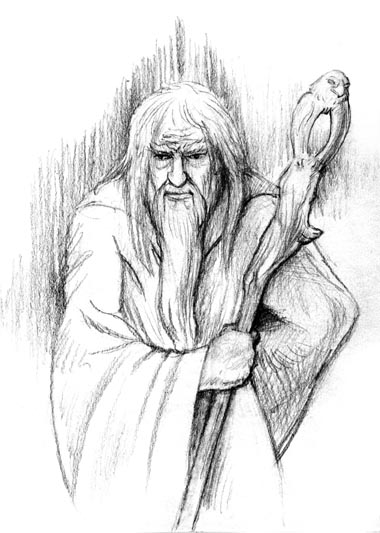
A thousand years or more before the dark day of the Battle of the Black Field a stranger came to the south west of the Southern Lands. No one knew where he came from. No one knew where he was going. He was dressed in brown, threadbare clothes and a formless felt hat hung over his half blind eyes. In his right hand he carried a black staff and in the left a leather bag with books which he sometimes swung onto his bowed back.
The people of the town of Hêrgereh, which in that time was a city with its own House of Learning, welcomed the man when they saw that he had books with him which they didn’t know of.
He also showed them wonderful works, which he seemed to do with his Talent, like curing the city ruler’s son from a sudden illness that affected his brain and mind. What the people didn’t know was that he was one of the Lewjan that came to them in human form to seduce them and lead them away from the Allwaldan. He let them copy the books and helped them to translate the books into the Erewhar’s language from a strange language which they didn’t know. Through this, they learned of a new power. They gave this knowledge to those among them who was not learned until every Erewhar in Hêrgereh used the new power and not their given Talent.
Then they went to the other towns of the Erewhar and those from Hêrgereh gave them the knowledge of the Lewjan as well. Within two decades, all the Erewhar had turned away from their Talent and Allwaldan and now followed the Lewjan, even though many at the time did not realise this yet.
The Lewjan that went to the Erewhar took on his true, twisted form on the day that the last Erewhar turned away from the Creator and he laughed at them and their Houses of Learning. “Just look how quickly the pious Erewhar turns from their Creator! You will serve my master for the rest of Airthai’s existence!”
Then the Erewhar knew that it was a Lewjan in front of them and that they had lost the Talent that had been given to them. They had turned so far from Allwaldan, that they had even forgotten their own laws and blood ran in the streets of the Erewhar towns as each fought for more power.
One after the other the wonderful towns, city and Houses of Learning of the Erewhar fell in flames and ruins.
But the Creator will never leave his creations for the Lewjan and sent three Airus to one of the towns where some of the Erewhar had come to see that they had turned from their Creator and sought a way back somehow. At first they turned a cold shoulder to the Airus, thinking that they also wanted to lead them from the light, and did not want to listen to them. But in time they learned again their old ways and found that, when they broke through the Lewjan’s chains and chose the side of the Light that they received a new Talent – one with which to better fight the Lewjan.
Because they had been under the Lewjan for more than a generation by this time, they found that the Lewjan still had some kind of hold on them when they used their Talent. The Erewhar had the Talent to fight the Lewjan, just like the Ahma, but a deathly sin had been awakened in them and when they fought they did not want to only fight for their and other’s freedom, but also to gain power or exact revenge. That is why they took to saying that the shadow of the Lewjan always followed them. For many generations the Erewhar would still fight against the power of the Lewjan.
Then one of the women who lived on the outskirts of the Erewhar’s lands gave birth to a daughter. She was not only taught by her family, but also by the Ahma from Reiaghy that heard about the family’s goodness and that they wanted to shun the Lewjan completely. She was called Aleidys. When she was twenty years old Aleidys, along with others of her town that shunned the Lewjan, and the Ahma, went to the other towns and through their use of their Talent and their words convince the people to turn against the Lewjan.
The Erewhar freed themselves from the Lewjan’s chains slowly and came in revolt against the Lewjan and their minions. They drove away the old man and any other Lewjan they found in the towns.
On the last day of the hundredth year since the coming of the Lewjan to the Erewhar the soldiers of the Erewhar stood against the Lewjan. A fierce fight was fought on that day. The Lewjan attacked the Erewhar with fire, but not one hair on the heads of the Erewhar was singed. Some of the witnesses later said that they saw the Airus that fought on the field alongside the Erewhar and kept the fire from them. The Erewhar stood strong because they knew that this battle was not just for their freedom, but for their very souls.
Some of the Erewhar, however, were so drunk and blind with the power the Lewjan gave and promised them, that they still chose to go with the Lewjan even after the Erewhar had won and were taken away in a plume of smoke when the new day dawned. They were not seen again in their own human form, but were rumoured to dwell in the Death Plain seeking souls to twist as their own were twisted. They could take on any form that they wished, like the strongest of the Lewjan, and it is said that they often took the form of seductive women to seduce men with their looks and voices.
The Erewhar who stayed behind found the ground turned to ash where they stood and not one tree still stood on the burnt plain. Around them was nothing but ash and mud. And so they trekked south to seek help from the neighbouring countries. Aleidys led the group that would later become the Whargahn clan.
They made their new home in and around the woods of Reiaghor and that is where Eldarion Whargahn of the Whargahn clan stood against the Khalvér.
The people of the town of Hêrgereh, which in that time was a city with its own House of Learning, welcomed the man when they saw that he had books with him which they didn’t know of.
He also showed them wonderful works, which he seemed to do with his Talent, like curing the city ruler’s son from a sudden illness that affected his brain and mind. What the people didn’t know was that he was one of the Lewjan that came to them in human form to seduce them and lead them away from the Allwaldan. He let them copy the books and helped them to translate the books into the Erewhar’s language from a strange language which they didn’t know. Through this, they learned of a new power. They gave this knowledge to those among them who was not learned until every Erewhar in Hêrgereh used the new power and not their given Talent.
Then they went to the other towns of the Erewhar and those from Hêrgereh gave them the knowledge of the Lewjan as well. Within two decades, all the Erewhar had turned away from their Talent and Allwaldan and now followed the Lewjan, even though many at the time did not realise this yet.
The Lewjan that went to the Erewhar took on his true, twisted form on the day that the last Erewhar turned away from the Creator and he laughed at them and their Houses of Learning. “Just look how quickly the pious Erewhar turns from their Creator! You will serve my master for the rest of Airthai’s existence!”
Then the Erewhar knew that it was a Lewjan in front of them and that they had lost the Talent that had been given to them. They had turned so far from Allwaldan, that they had even forgotten their own laws and blood ran in the streets of the Erewhar towns as each fought for more power.
One after the other the wonderful towns, city and Houses of Learning of the Erewhar fell in flames and ruins.
But the Creator will never leave his creations for the Lewjan and sent three Airus to one of the towns where some of the Erewhar had come to see that they had turned from their Creator and sought a way back somehow. At first they turned a cold shoulder to the Airus, thinking that they also wanted to lead them from the light, and did not want to listen to them. But in time they learned again their old ways and found that, when they broke through the Lewjan’s chains and chose the side of the Light that they received a new Talent – one with which to better fight the Lewjan.
Because they had been under the Lewjan for more than a generation by this time, they found that the Lewjan still had some kind of hold on them when they used their Talent. The Erewhar had the Talent to fight the Lewjan, just like the Ahma, but a deathly sin had been awakened in them and when they fought they did not want to only fight for their and other’s freedom, but also to gain power or exact revenge. That is why they took to saying that the shadow of the Lewjan always followed them. For many generations the Erewhar would still fight against the power of the Lewjan.
Then one of the women who lived on the outskirts of the Erewhar’s lands gave birth to a daughter. She was not only taught by her family, but also by the Ahma from Reiaghy that heard about the family’s goodness and that they wanted to shun the Lewjan completely. She was called Aleidys. When she was twenty years old Aleidys, along with others of her town that shunned the Lewjan, and the Ahma, went to the other towns and through their use of their Talent and their words convince the people to turn against the Lewjan.
The Erewhar freed themselves from the Lewjan’s chains slowly and came in revolt against the Lewjan and their minions. They drove away the old man and any other Lewjan they found in the towns.
On the last day of the hundredth year since the coming of the Lewjan to the Erewhar the soldiers of the Erewhar stood against the Lewjan. A fierce fight was fought on that day. The Lewjan attacked the Erewhar with fire, but not one hair on the heads of the Erewhar was singed. Some of the witnesses later said that they saw the Airus that fought on the field alongside the Erewhar and kept the fire from them. The Erewhar stood strong because they knew that this battle was not just for their freedom, but for their very souls.
Some of the Erewhar, however, were so drunk and blind with the power the Lewjan gave and promised them, that they still chose to go with the Lewjan even after the Erewhar had won and were taken away in a plume of smoke when the new day dawned. They were not seen again in their own human form, but were rumoured to dwell in the Death Plain seeking souls to twist as their own were twisted. They could take on any form that they wished, like the strongest of the Lewjan, and it is said that they often took the form of seductive women to seduce men with their looks and voices.
The Erewhar who stayed behind found the ground turned to ash where they stood and not one tree still stood on the burnt plain. Around them was nothing but ash and mud. And so they trekked south to seek help from the neighbouring countries. Aleidys led the group that would later become the Whargahn clan.
They made their new home in and around the woods of Reiaghor and that is where Eldarion Whargahn of the Whargahn clan stood against the Khalvér.
Tuesday, March 8, 2011
Trelagor
The paper, upon which the declaration was written, was much like any other. It was cheaper than most, letting some of the ink on it run, but as far as paper went, it did its work well. Hundreds of the same letter had been printed in the last few months since the outbreak of disease and countless riots engulfed the largest cities in the country. Only a few ports remained open, and anyone with a ship these days could make a fortune taking people away across the sea to foreign lands where they could start anew and claim a new life away from the squalor of the falling empires.
“Next!” the barely literate captain called and the queue of people shuffled along another step. The one in front placed a handful of coins on the table, picked up the quill, dipped it with an unsteady hand into the ink pot and drew a cross on the page held out to him, relieving him of his citizenship. Citizenship of his own country where his people had lived for centuries. The page was handed to an official-looking man and the command of ‘next’ was shouted again.
Another shuffle.
Mary took a slight step to the side and counted the people in front of her. Ten. She prayed that there would still be eleven places open on the ship. She drew her shawl closer about her shoulders and tightened one hand on her luggage. In the other she clutched, like the rest of the bedraggled people, a couple of coins that would pay her way onto the ship and to freedom.
Shuffle.
She had more knowledge than most of what it was like in the other land. It was new, mostly untilled with rich soil and lots of work. She had heard of the treasures brought back; of beasts and birds that now lived on the grounds of the great palace. The air was pure, not clogged with smog from factories and burning buildings from the riots. But it was always difficult to start over. Utopia was nowhere, especially not here.
Shuffle.
In the new lands a new life could be built and the shackles of the old could be thrown off. There, you could be anything you want to be.
Shuffle.
From the ship came angry shouts and Mary dared to look at the great wooden ship on the water. A few men were escorting another dressed in rags from the ship, dragging him along the gangplanks. As they passed her, she could make out the dirty guard uniforms, their once bright colours darkened with soot. The man’s wrists and ankles were encased in iron, so that he stumbled again and again. One of the guards glared at the captain sitting behind the desk.
“He’s one of them, Captain, one of them Trelagor. Heretics and witches. Vermin all of them.” Then he turned to the crowd gathered before the captain.
“I say again to you, people of Elganorë. His Majesty the King forbids all that are classified as Trelagor to leave the country, on pain of death. Those that are of mixed blood are classified as Trelagor, and they are also forbidden to leave the country. Only the pure of Elganorë may travel.” He glared at the crowd, but, being satisfied with his speech, leaves.
Mary turns her eyes to the ground as he passes her, clutching the bag tighter in her hand.
Shuffle... Shuffle...
One less man means one more space on the ship. One more space may be all she needs.
Shuffle...
Mary forces the thought of the man being hanged from her mind as she shuffled to the desk. The captain looked up at her.
“Do you declare that you are not Trelagor, but are of pure Elganorë?” he repeated the question for the umpteenth time that day.
“I do.”
“Do you declare that you are neither heretic, nor witch, nor have any contact with any such persons?”
“I do.”
“Then make your mark.” He caught her eyes and she froze, knowing that he would have seen the colour of her eyes and know her to be one of the Trelagor. Then he smiles slightly. “Make your mark, there’s many like you still waiting.”
With a trembling hand she picked up the quill and drew a cross on the page.
I wrote this piece a couple of years ago and dusted it off. It's still a favourite piece and a world I want to write more about in the future. Whether the story will follow Mary or stay behind and see what becomes of the Trelagor (and why they are hated so), or maybe even both, I will have to see.
I'm also polishing a world building piece on the Erewhar of Airthai. It seems they are intent on playing a much bigger part in "Price of Freedom" than I had anticipated!
Until next time, keep well and God bless!
“Next!” the barely literate captain called and the queue of people shuffled along another step. The one in front placed a handful of coins on the table, picked up the quill, dipped it with an unsteady hand into the ink pot and drew a cross on the page held out to him, relieving him of his citizenship. Citizenship of his own country where his people had lived for centuries. The page was handed to an official-looking man and the command of ‘next’ was shouted again.
Another shuffle.
Mary took a slight step to the side and counted the people in front of her. Ten. She prayed that there would still be eleven places open on the ship. She drew her shawl closer about her shoulders and tightened one hand on her luggage. In the other she clutched, like the rest of the bedraggled people, a couple of coins that would pay her way onto the ship and to freedom.
Shuffle.
She had more knowledge than most of what it was like in the other land. It was new, mostly untilled with rich soil and lots of work. She had heard of the treasures brought back; of beasts and birds that now lived on the grounds of the great palace. The air was pure, not clogged with smog from factories and burning buildings from the riots. But it was always difficult to start over. Utopia was nowhere, especially not here.
Shuffle.
In the new lands a new life could be built and the shackles of the old could be thrown off. There, you could be anything you want to be.
Shuffle.
From the ship came angry shouts and Mary dared to look at the great wooden ship on the water. A few men were escorting another dressed in rags from the ship, dragging him along the gangplanks. As they passed her, she could make out the dirty guard uniforms, their once bright colours darkened with soot. The man’s wrists and ankles were encased in iron, so that he stumbled again and again. One of the guards glared at the captain sitting behind the desk.
“He’s one of them, Captain, one of them Trelagor. Heretics and witches. Vermin all of them.” Then he turned to the crowd gathered before the captain.
“I say again to you, people of Elganorë. His Majesty the King forbids all that are classified as Trelagor to leave the country, on pain of death. Those that are of mixed blood are classified as Trelagor, and they are also forbidden to leave the country. Only the pure of Elganorë may travel.” He glared at the crowd, but, being satisfied with his speech, leaves.
Mary turns her eyes to the ground as he passes her, clutching the bag tighter in her hand.
Shuffle... Shuffle...
One less man means one more space on the ship. One more space may be all she needs.
Shuffle...
Mary forces the thought of the man being hanged from her mind as she shuffled to the desk. The captain looked up at her.
“Do you declare that you are not Trelagor, but are of pure Elganorë?” he repeated the question for the umpteenth time that day.
“I do.”
“Do you declare that you are neither heretic, nor witch, nor have any contact with any such persons?”
“I do.”
“Then make your mark.” He caught her eyes and she froze, knowing that he would have seen the colour of her eyes and know her to be one of the Trelagor. Then he smiles slightly. “Make your mark, there’s many like you still waiting.”
With a trembling hand she picked up the quill and drew a cross on the page.
I wrote this piece a couple of years ago and dusted it off. It's still a favourite piece and a world I want to write more about in the future. Whether the story will follow Mary or stay behind and see what becomes of the Trelagor (and why they are hated so), or maybe even both, I will have to see.
I'm also polishing a world building piece on the Erewhar of Airthai. It seems they are intent on playing a much bigger part in "Price of Freedom" than I had anticipated!
Until next time, keep well and God bless!
Subscribe to:
Posts (Atom)